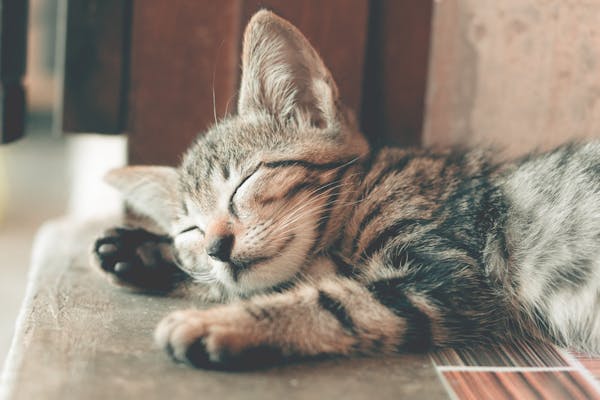
Your dog sleeps 12 to 14 hours a day. Your cat sleeps 15 to 16. That is more than half their life spent on whatever surface they have claimed as their bed. And yet, most pet owners put more thought into choosing their own pillows than they do picking the right bed for their pet.
A good pet bed is not just a comfort thing. It directly affects your pet's joint health, anxiety levels, and even their behavior. A dog sleeping on a flat, unsupportive surface for years is going to feel it in their hips and shoulders, especially larger breeds. And a cat that does not feel safe where it sleeps will never fully relax. The right bed fixes both problems, but only if you match it to your pet's actual needs.
Step 1: Figure Out How Your Pet Sleeps
Before you even look at bed styles, spend a couple of days watching how your pet naturally sleeps. Their preferred position tells you exactly what kind of bed they need.
The Curler
If your dog or cat sleeps curled up in a tight ball with their nose tucked near their tail, they are a curler. This is one of the most common sleep positions, and it means your pet instinctively wants to feel enclosed and protected. Bolstered beds or donut-style beds with raised edges are perfect here. The raised rim gives them something to rest their head on and creates that den-like feeling of security. This is especially common in smaller breeds like Chihuahuas, Dachshunds, and Cavalier King Charles Spaniels.
The Sprawler
You know the type. Legs everywhere, belly up, taking up as much space as physically possible. Labs and Golden Retrievers are notorious sprawlers. These dogs need a flat mat or an oversized bed with no raised edges getting in the way. If you buy a bolster bed for a sprawler, they will just hang their legs over the sides, which defeats the purpose of having a supportive surface.
The Side Sleeper
Side sleepers stretch out on one side with their legs extended. They need a bed that is long enough to accommodate their full body length and soft enough to cushion their shoulder and hip. This position is common in relaxed, comfortable dogs, and an orthopedic bed with plush padding is the ideal match because it distributes weight evenly across their side.
The Burrower
Some pets love to dig under blankets, wedge themselves behind couch cushions, or crawl into tight spaces. Cats are especially guilty of this. If your pet is a burrower, they want to feel hidden and warm. Enclosed cave-style beds or hooded beds give them that cozy den experience. Our Warm and Cozy Cat Bed is designed exactly for this, with a soft enclosed structure that lets cats burrow in and disappear.
Step 2: Size It Right
This sounds obvious, but the number one mistake people make when buying a pet bed is getting one that is too small. A bed that looks big enough in the store shrinks fast once your 70-pound Lab tries to curl up on it.
Here is the simple formula: measure your pet from the tip of their nose to the base of their tail while they are lying down in their natural sleeping position. Then add 6 to 8 inches. That is your minimum bed size. If your pet is a sprawler, add even more. It is always better to go slightly too big than slightly too small.
For cats, size matters less than shape. Most cats care more about the style of the bed and its location than the dimensions. A small, enclosed bed in a warm, elevated spot will get used far more than a giant flat cushion on the cold floor.
What Cats Actually Want in a Bed
Cats are not small dogs, and their bed preferences reflect that. Here is what matters to most cats:
Warmth is everything. Cats have a thermoneutral zone of about 86 to 97 degrees Fahrenheit, which is higher than most rooms. That is why they chase sun spots and sleep on laptops. Place their bed near a heat source, a sunny window, or an elevated surface where warm air collects. A bed with insulating materials like the Luxury Plush Cat Bed retains body heat and keeps them comfortable without needing to sit on your keyboard.
Elevation wins. Cats feel safest off the ground. If you can place their bed on a shelf, window perch, or cat tree, they are far more likely to actually use it.
Anxious cats need enclosure. If your cat is shy, skittish, or recently adopted, an enclosed bed gives them a hiding spot that doubles as a sleep space. Covered beds reduce visual stimulation and make nervous cats feel protected. For cats with anxiety issues, this can make a noticeable difference in their stress levels.
Washability Is Non-Negotiable
This is the part nobody thinks about until their pet's bed smells like a locker room. Pet beds collect an alarming amount of dander, dead skin, saliva, dirt, dust mites, and in some cases, flea eggs. If your pet has allergies, a dirty bed will make them worse. If anyone in your household has allergies, same deal.
The rule is simple: if you cannot toss it in the washing machine, skip it. A bed with a removable, machine-washable cover is the bare minimum. Even better is one where the entire bed goes in the wash. Our PurrClean Washable Pet Bed is designed with this exact problem in mind. The entire thing is machine washable and dryer safe, so you can keep it genuinely clean without any hassle.
Plan to wash the cover every 1 to 2 weeks. If your pet goes outdoors a lot, has skin issues, or is a drooler, weekly is better. It takes three minutes to throw it in the machine. Your pet's health and your nose will both thank you.
Orthopedic Beds: Who Actually Needs One
Orthopedic beds use memory foam or high-density foam that conforms to your pet's body and supports their joints. They are not just a fancy upgrade. For certain dogs, they are genuinely important.
Senior dogs benefit the most. Arthritis affects roughly 20% of dogs over the age of 7, and the number jumps significantly for large breeds. A standard stuffed bed compresses flat over time and offers almost no joint support. Memory foam distributes weight evenly, reduces pressure on hips and shoulders, and can visibly improve mobility in older dogs.
Large and giant breeds like Great Danes, Mastiffs, Bernese Mountain Dogs, and Saint Bernards put a lot of weight on their joints even when they are just lying down. An orthopedic dog bed reduces that pressure and can help prevent joint issues before they start.
Post-surgery dogs recovering from procedures like ACL repair or hip surgery need a supportive surface that does not require effort to get in and out of. Low-profile orthopedic beds with a step-on design are ideal here.
For healthy young dogs of small to medium breeds, a standard quality bed with decent padding is usually fine. But if you have a large breed puppy, investing in an orthopedic bed early is smart. Breeds like German Shepherds and Labrador Retrievers are predisposed to hip dysplasia, and joint-supportive bedding from day one can reduce long-term wear.
When to Replace Your Pet's Bed
Even the best pet bed does not last forever. Here are the signs it is time for a new one:
- Flattened fill: Press the center of the bed with your hand. If the fill does not spring back within a few seconds, it is no longer providing support. Your pet is basically sleeping on a thin sheet over the floor.
- Persistent odor after washing: If the bed still smells after a full wash and dry cycle, bacteria and oils have soaked into the foam or fill material. No amount of washing will fix it.
- Visible wear: Torn fabric, exposed foam, loose seams, or chewed corners mean the bed has lost its structural integrity. Loose fill material can also be a choking hazard.
- Your pet stops using it: Dogs and cats are surprisingly good at knowing when a bed is no longer comfortable. If your pet starts choosing the floor or the couch over their bed, take the hint.
Most pet beds last 1 to 3 years depending on quality, size of the pet, and how frequently they are washed. Orthopedic beds with high-density foam tend to last the longest.
Quick-Buy Guide
If you want to skip the research and just get the right bed, here is the cheat sheet:
- Small dog (under 25 lbs): Bolster bed with raised edges for curling up
- Medium dog (25 to 60 lbs): Flat cushion or sofa-style bed with washable cover
- Large dog (60+ lbs): Orthopedic flat bed with memory foam support
- Anxious dog or cat: Donut or cave-style bed with raised edges or enclosure
- Kitten or shy cat: Enclosed warm bed placed in a quiet, elevated spot
- Confident, social cat: Open plush bed near a window or on a perch
- Any pet with allergies: Fully machine-washable bed
The bottom line is this: your pet spends more time on their bed than anywhere else. A $30 bed that flattens in two months is not a deal. Invest in something that supports their body, fits their sleep style, and can actually be kept clean. They will sleep better, and honestly, so will you.
Find the Perfect Bed for Your Pet
From orthopedic dog beds to cozy cat caves, we have comfort covered for every sleep style.